Types of Infused Pre-Rolls: A Manufacturer’s Guide
In the ever-evolving world of cannabis, it seems like there’s a new type of infused pre-roll on the shelf every time you shop a new menu.
From kief-coated pre-rolls to diamond-infused joints to hash-hole donuts and beyond, figuring out the product category can feel like whack-a-mole if you’re an operator planning your SKUs.
Which ones do people like the most? Which are the most potent? Which is the most or least challenging to produce? Which has the highest return?
Factor in the differences between each extract, which affect production costs, material usage, labor, equipment compatibility, and consistency across batches, and deciding the right pre-roll for your operation to focus on can feel nearly impossible to pin down.
That’s where this guide comes in. Before we ever began designing pre-roll production equipment, we cut our teeth on the production floor, manufacturing just about every type of pre-roll imaginable for clients.
We’ll help you identify which products work best in small batches, which may be difficult or expensive to reproduce at commercial scale, and how to implement uniform coatings consistently – when required – with the assistance of machinery and automation.
Keep reading to learn about the seven types of infused pre-rolls and decide which ones your brand should make.
What Are Infused Pre-Rolls?
Infused pre-rolls are pre-rolled cones filled with cannabis flower, with one or more concentrates infused into them.
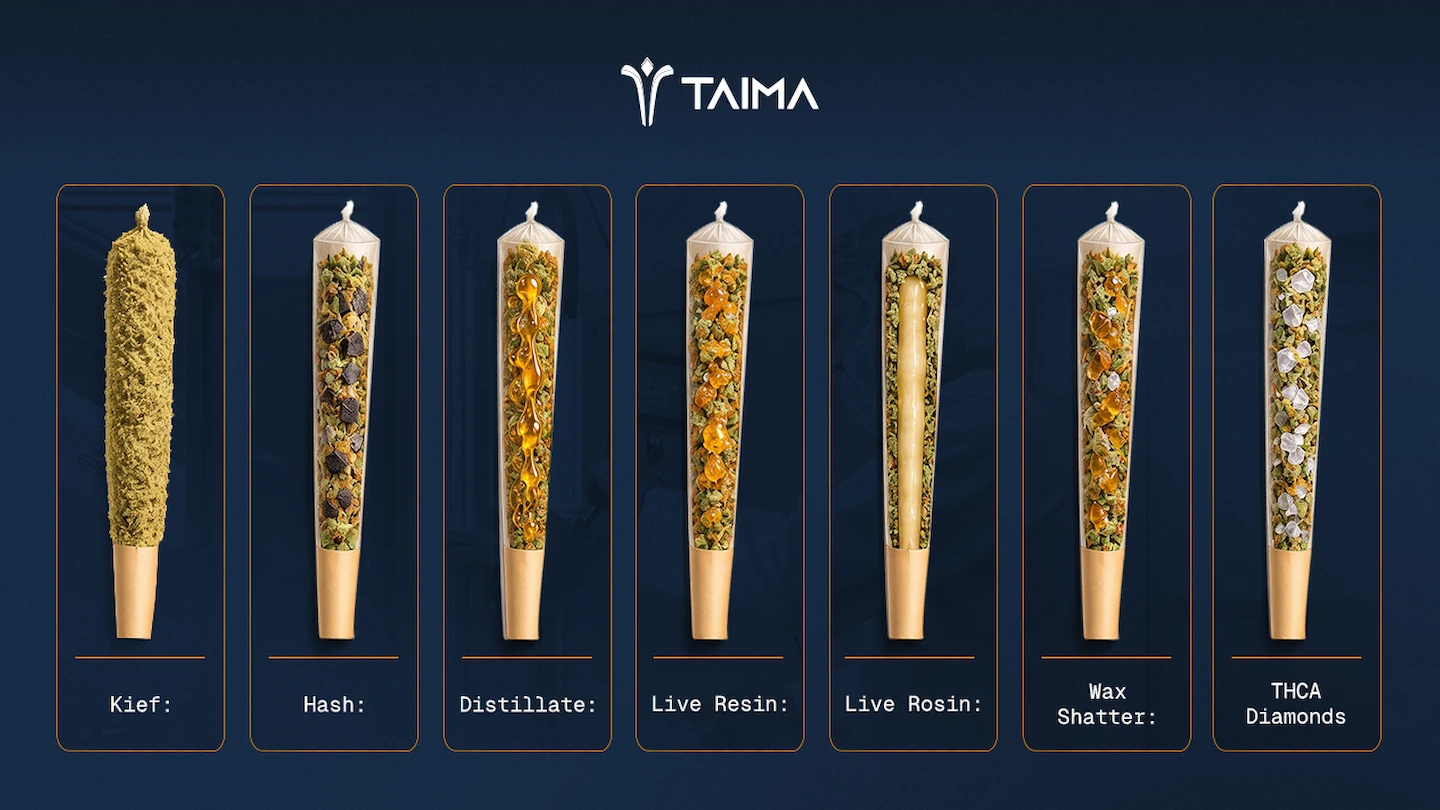
The most common extracts or concentrates used for infusion include:
- Kief
- Hash
- Distillate
- Live resin
- Live rosin or rosin
- THCA diamonds
Each infused pre-roll will differ in which concentrate is used and how it’s infused into the joint. Concentrate may be mixed into the flower, placed as a concentrated core (like a hash hole), or used to coat the outside of the joint
The added extract not only increases cannabinoid potency but also adds flavor and affects how it looks and smokes.
Infused pre-rolls present a dual challenge: people love them, so you need to make them, but they also require unique workflows to manufacture consistently.
Types of Infused Pre-Rolls by Concentrate
Now let’s break down the different types of infused pre-rolls, by the concentrate they contain.
Kief-Infused Pre-Rolls
Kief is the term given to the loose, powdery extract or byproduct of grinding and sifting cannabis, with piles of its raw trichomes serving as a concentrate for many infused pre-rolls.
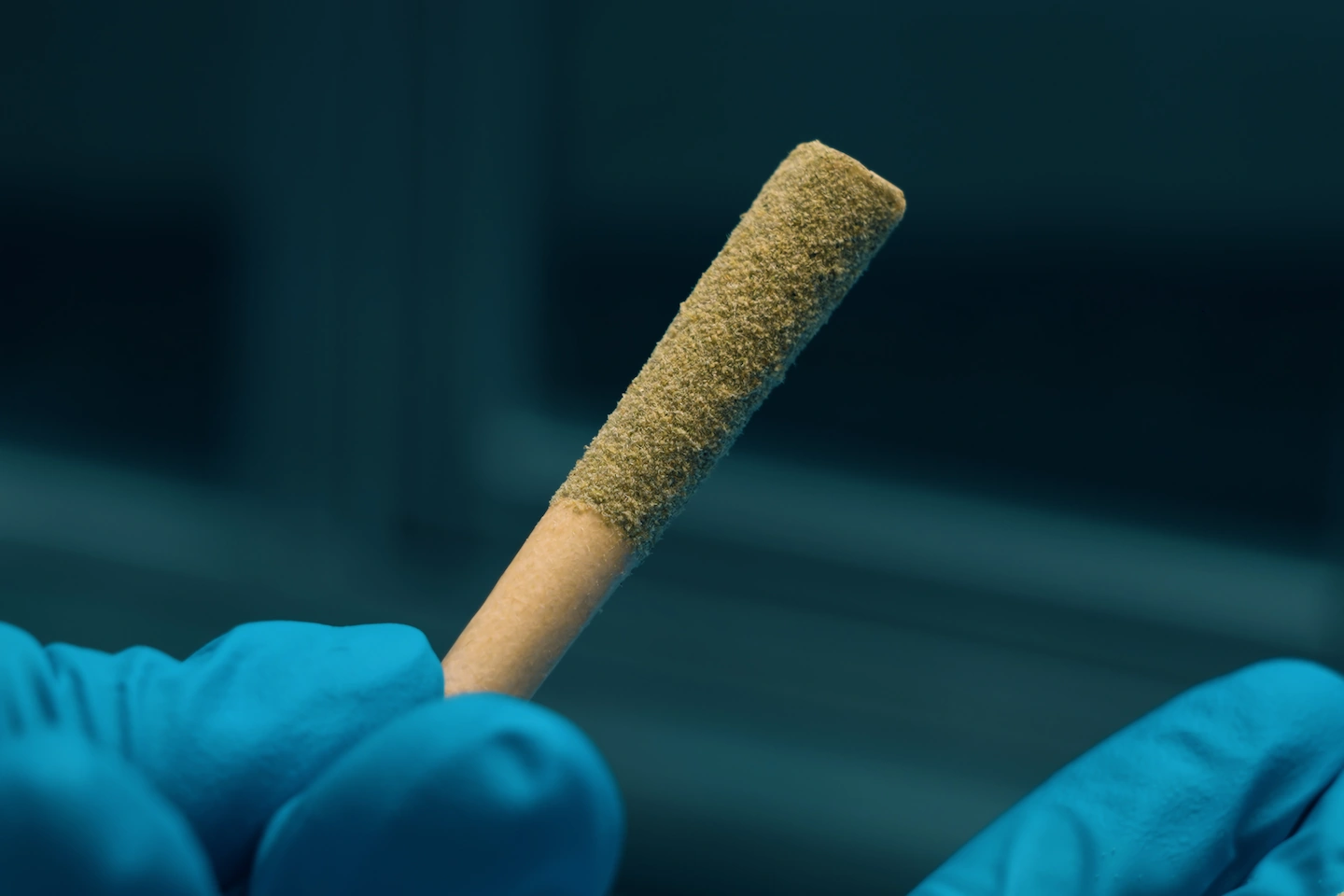
Kief-infused pre-rolls may contain a flower-kief mixture, or the kief may be added to the exterior to give these joints a recognizable frosted appearance.
Kief varies widely in consistency: lower-purity material can contain plant debris that affects particle size and composition, which can then affect a pre-roll’s consistency or appearance when you coat it.
The biggest challenges manufacturers face when producing kief-infused pre-rolls are achieving even coverage, preventing clumping and material loss, and maintaining consistent application across large production runs so that quality stays consistently high.
Still, many operators are adding kief-coated pre-rolls to their menus, as their unique flavors, effects, and aesthetic offer a one-of-a-kind experience for consumers and enables premium pricing.
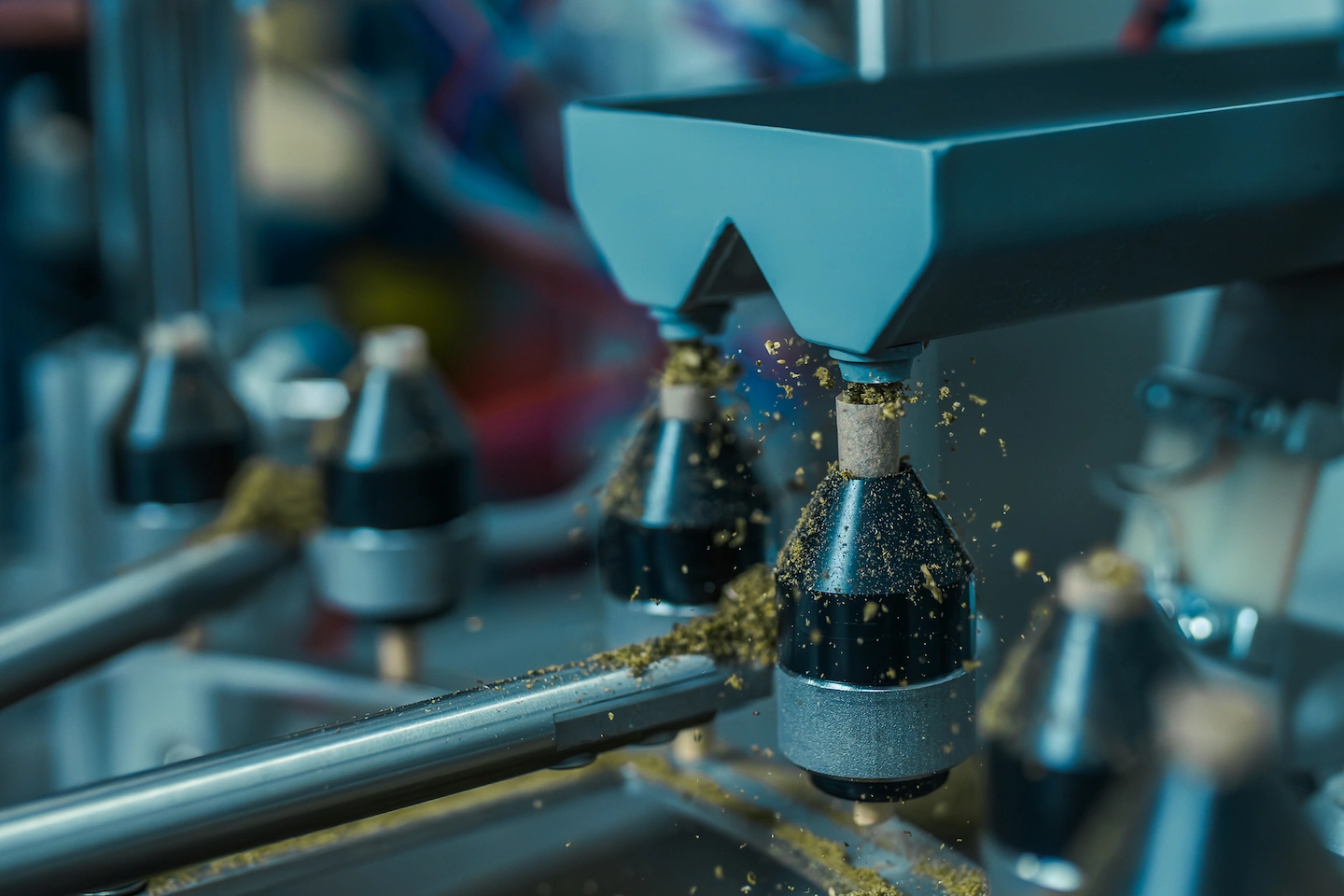
When scaling kief-infused pre-rolls, it’s important to choose your equipment carefully. At Taima, our kief coating machine was designed by operators with first-hand production experience.
We were contract manufacturers before we made kief-coating machines, and we needed a better way to apply these coatings. So, the setup we created accounts for the challenges of making kief-coated pre-rolls better than most machines on the market.
Hash-Infused Pre-Rolls
Hash is another familiar concentrate that comes from collected trichomes. It’s typically made by pressing dry, sifted kief, while bubble hash uses ice water to agitate and isolate trichomes from plant material, then sifting to remove the plant matter.
Regardless of the method, the material is broken up and blended with ground-up flower or incorporated as a concentrated core, aka a “hash hole,” which is typically made from hash rosin.
Hash rosin is a concentrate made by pressing hash at low heat to extract oil from the trichomes.
If your brand has craft or solventless lines, hash-rosin or hash-infused pre-rolls are a natural fit, and they demand higher retail prices.
However, there are considerations you’ll need to make to consistently produce these SKUs. Because of hash’s texture, particle size, and tendency to clump, mixing it evenly with the flower is an art you’ll need to perfect so your pre-rolls will burn and pull smoothly.
Distillate-Infused Pre-Rolls
One of the easier-to-find and easier-to-manufacture infused pre-rolls on shelves today are distillate-infused joints.
Distillate is the most refined cannabis extract. The distillation process removes much of the plant’s original compounds, leaving a viscous oil behind with high levels of THC.
This makes it a good option if your goal is to sell highly potent pre-rolls without worrying about the terpenes or flavor of the original infusions. You can then add terpenes separately in a more controlled manner to create specific flavor or aroma profiles.
Distillate is one of the most versatile pre-roll infusions, and can be infused into the flower or applied to the pre-roll's exterior for a kief coating.
Both types of applications affect how the oil distributes through the product and, therefore, how it smokes. So carefully consider how you construct these pre-rolls, especially when you want repeat customers and not those who toss your brand aside for canoeing or side-burning.
At Taima, we help prevent these challenges from reaching the consumer by supporting calibrated infusion ratios, controlled oil distribution, and standardized fill density.
These processes help achieve repeatable cannabinoid distribution across commercial batches, supporting a more consistent product from one pre-roll to the next.
Live Resin-Infused Pre-Rolls
Unlike distillate, live resin-infused pre-rolls are typically chock-full of terpenes and cannabinoids thanks to their unique processing.
The “live” in live resin refers to the concentrate being extracted from cannabis flower that’s freshly frozen upon harvesting.
This preserves the plant’s natural terpene levels at their peak, rather than letting them change and degrade as they dry and cure for smokeable flower.
Because live resin contains a blend of cannabinoids and naturally derived terpenes, live resin-infused pre-rolls appeal to connoisseur-type consumers and brands developing craft- or flavor-forward SKUs.
Of course, because live resin’s consistency and texture will vary from strain to strain, it can make it more difficult for you to produce a consistent product – something to consider when scaling the product category.
While a terpene-rich product like live resin-infused pre-rolls can command higher retail prices, maintaining your brand’s premium positioning relies on preserving the material’s quality at each step and building a pre-roll that accounts for batch-to-batch inconsistencies while prioritizing airflow and even burning.
Live Rosin-Infused Pre-Rolls
The difference between live rosin and live resin is that resin is made with solvent-based extraction methods, while rosin is made with solventless extraction methods, like hash rosin, as we previously described.
Live rosin is made from freshly frozen flower material, but instead of extracting the oil using CO₂, butane, or ethanol, like solvent-based live resin, it uses only temperature and pressure to extract the oil from the plant’s trichomes.
It’s considered the most premium concentrate on the market today, commanding the highest prices and attracting the most experienced and exploratory consumers.
Live rosin, like other more terpene-rich extracts, will have different consistencies depending on the strain. It can range from butter-like to waxy or more fluid textures.
This makes incorporating it into infused pre-rolls tricky for operators, especially when producing consistent, premium products that support customer and brand loyalty.
Because of its unique processing, live rosin has the highest input cost of concentrates, making careful handling even more important to prevent financial loss and maximize ROI.
Manufacturing factors can affect quality, so filtering and infusion matter more for finished-product performance and batch consistency.
Wax & Shatter-Infused Pre-Rolls
Wax and shatter are two other concentrates that are used to infused pre-rolls.
True to their names, wax is a concentrate with a wax-like consistency, while shatter is a clear (although often tinted), glass-like concentrate. Both are made from solvent-based extraction methods.
Both concentrates can increase the potency of pre-rolls, but their consistencies aren’t as ideal for infusion into ground flower or integration into the center of a joint.
However, they’re still used because they both provide unique THC and terpene concentrates for variety.
During manufacturing, one of the biggest factors to watch for is heat exposure and temperature, such that the concentrate melts properly into the flower without having the constituent parts ruined.
THCA Diamond-Infused Pre-Rolls
Last but certainly not least are THCA diamond-infused pre-rolls.
Diamonds are crystalline-like concentrates that look like diamonds. They’re extremely potent – often 99% or more THC – so they’re a go-to among manufacturers who want to make the most powerful pre-rolls possible.
THCA diamonds are made through a process that uses extensive refinement, so they are tasteless and lack aroma. However, many producers will add terpenes or even other concentrates to influence the flavor and aroma profile of the final pre-roll.
You’ll also often see liquid diamonds used for infusion, which are more like distillate in consistency but diamond-like in structure and texture.
Like the other infused pre-roll types on our list, the construction and smokeability of THCA-diamond infused pre-rolls will rely heavily on the final formulation of the flower and material. Watch for clumping in order to produce pre-rolls that maintain a uniform texture and smoke well.
How Are Infused Pre-Rolls Made?
Next, let’s break down the different ways in which these types of infused pre-rolls are made.
Internal Infusion
Internal infusion involves infusing the concentrate directly into the flower before filling, rather than adding it to each pre-roll individually.
This method is most commonly used for these concentrates:
- Kief
- Ground THCA diamonds
- Distillate
If the material is already coated or infused, manufacturers can simply fill pre-rolls rather than fill and infuse.
One challenge to keep in mind, however, is handling both dry extracts (like kief) and viscous oils (like distillate), which can cause clumping or interfere with automated filling.
A blend that works in small batches may not feed consistently through commercial equipment.
In this case, manufacturers will typically adjust their formula to match the equipment.
External Coating
External coating is the process of applying an extract – such as kief – to the exterior of a pre-roll.
These joints are often called “tarantula pre-rolls” because the kief coating resembles the texture exterior of the spider. Their appearance provides instant consumer appeal.
That said, it takes extra care and attention to ensure the concentrate is applied evenly to the exterior and that the coating coverage and adhesion are adequate for the premium aesthetic you’re seeking.
Too little adhesive oil can cause kief to shed, while excessive application can saturate the rolling paper, waste concentrate, and affect burning.
Core Infusion
A core infusion is when concentrates are applied to the center of the flower or pre-roll rather than mixed in or applied externally.
Here, you have to control not only core placement and injection technique, but also the surrounding flower density for smooth, even burns.
The most common concentrates for this method are:
- Hash or live rosin
- Live resin
- Distillate
Hash holes, or donuts, are the most notable examples in this category. When lit, the core melts and leaves a tunnel-like opening through the center.
Their unique core and marketable name let brands position pre-rolls at a premium level, selling them for more than conventionally infused pre-rolls.
Of course, to maintain consistency, core placement is crucial even when burning, and handling premium rosin is just as important for quality.
Variations in flower density or injection depth can leave cores off-center, cause concentrate to migrate toward the paper, or affect burning.
Hybrid Infusion
Finally, hybrid infusion is when multiple infusion methods are used to make the same joint.
For instance, a pre-roll containing a flower-kief mixture with a rosin center core and exterior oil-and-kief coating.
Hybrid infusion gives your brand flexibility and variety. You can use different concentrates to create new flavors, potency levels, and appearances, which helps you to distinguish your products from the competition.
Of course, multiple infusions add production complexity that must be managed, since each stage must work with the next. For example, internally infused flower must still fill consistently before core infusion or exterior coating are added.
The additional materials also require accurate dosing and tracking, which can introduce inconsistencies and make it difficult to track cost and waste.
What helps is streamlining commercial production, with equipment that maintains the intended formulation and finished-product specifications across every stage without creating production bottlenecks.
How to Choose the Right Infused Pre-Roll Type for Your Brand
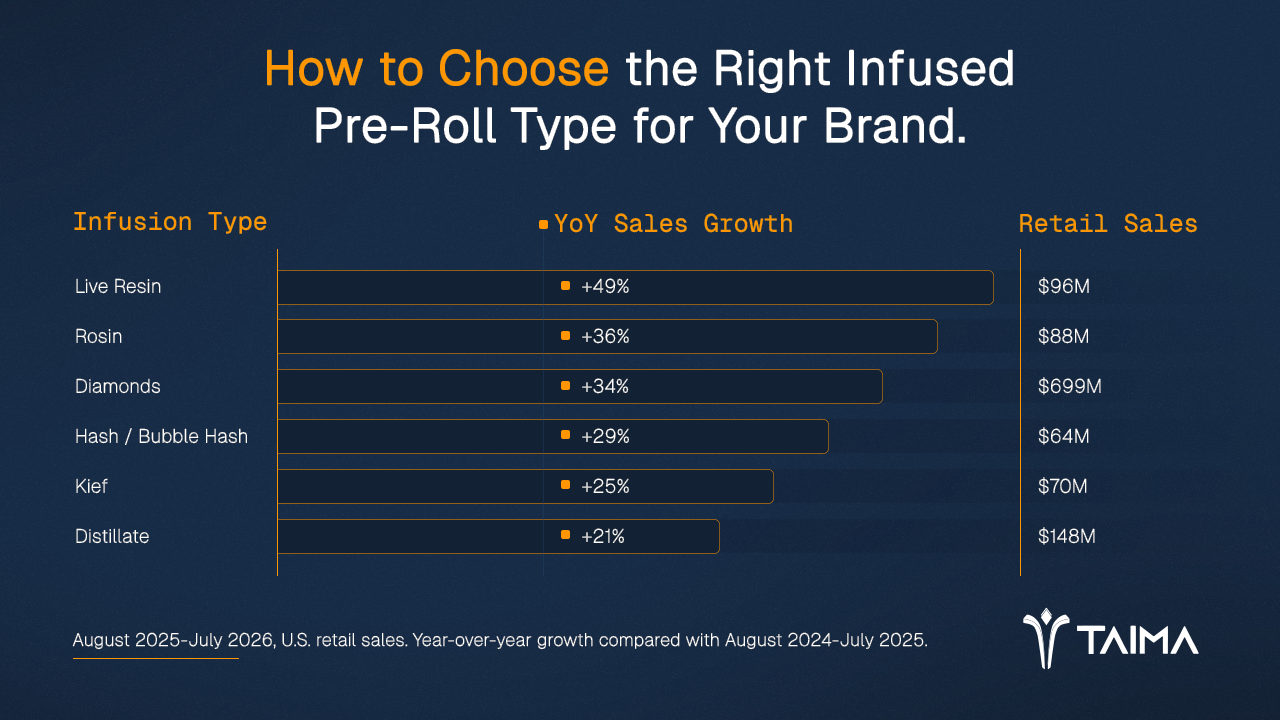
Lastly, here are five things to consider when choosing the right infused pre-roll type for your brand.
- Product Positioning: The concentrate you use should align with your intended customer, potency, flavor profile, and price point. For higher potency, distillate and THCA diamonds sell best, while live resin and rosin can appeal to terpene-conscious or solventless-focused consumers. Kief coatings appeal to premium and connoisseur-like consumers who value a recognizable visual finish.
- Production Costs: Factor in extract cost and usage per unit, labor, equipment requirements, material waste, and finished-product yield. A less expensive concentrate isn't necessarily more profitable if application requires extensive manual labor or results in significant waste.
- Equipment Compatibility: When equipment is essential to scaling, consider how different concentrates behave during commercial production. Distillate is typically less viscous, while live resin and rosin can require different handling temperatures or application settings. If you have existing filling, injection, or coating equipment, it may not accommodate every formulation without adjustments.
- Consistency and Quality: In the end, your pre-roll has to smoke consistently for a consumer to return, and its quality must be repeatable to maintain that loyalty. Concentrate distribution, dosing accuracy, fill density, airflow, and burn performance can vary between formulations. Always remember, a product that performs well in small test batches may become inconsistent when manufactured at scale.
- Scalability and Flexibility: When evaluating your pre-roll SKUs, consider production throughput, cleaning requirements, changeover times, and the ability to manufacture multiple infused SKUs on the same line. Adding new concentrates or infusion methods may create bottlenecks or require additional equipment, making it wise to look at your system as a whole. Even if one area of production outputs a higher volume, it can back up downstream.
Bring Your Infused Pre-Roll Concept to Production with Taima Extracts
Choosing the right infused pre-roll type is where you start. The next step is building a manufacturing process that can produce your intended formula at consistent quality in commercial volumes.
When faced with the same challenges, our team at Taima Extracts built equipment specifically designed for the production line.
Now, we’re offering it to operators looking to reduce production bottlenecks, handle concentrates with care, and automate operations to scale.
Contact us to learn more about our kief coating machine or discuss your manufacturing challenges and production goals.
Sources
[1] Lazarjani, M. P., Young, O., Kebede, L., et al. (2021). Processing and extraction methods of medicinal cannabis: A narrative review. Journal of Cannabis Research, 3, Article 32. https://doi.org/10.1186/s42238-021-00087-9
[2] Spadafora, N. D., Felletti, S., Chenet, T., et al. (2024). The influence of drying and storage conditions on the volatilome and cannabinoid content of Cannabis sativa L. inflorescences. Analytical and Bioanalytical Chemistry, 416, 3797–3809. https://doi.org/10.1007/s00216-024-05321-w
[3] BDSA. (2026). Cannabis pre-roll trends 2026: Six shifts reshaping the category. https://bdsa.com/cannabis-pre-roll-trends/