How to Produce Infused Pre-Rolls at Scale: A Production Guide
How to Produce Infused Pre-Rolls at Scale: A-Z Guide for Operators
Producing infused pre-rolls at scale can be unforgiving: concentrates are sticky, flower changes from batch to batch, and small inconsistencies that barely matter in a test run can become expensive when they occur across thousands of units.
The challenge isn’t simply producing more, but rather, keeping the product you developed intact as volume increases. The infusion needs to stay consistent, the pre-roll still needs to fill and burn properly, and adding speed at one stage can’t create a bottleneck somewhere else down the line.
This means production problems aren’t always equipment related. You might need to rethink the way your flower is ground, for example, or you might need to adjust the temperature of the concentrates you’re using.
The key to scaling infused pre-roll production, then, is getting all of the pieces to work together. In this guide, we’ll discuss the relevant steps and considerations to pulling this off effectively.
Choosing an Infusion Method
How you get the concentrate into, or onto, the pre-roll shapes much of the production process that follows. Each method handles a little differently at scale, and each comes with its own tradeoffs in consistency, speed, and complexity.
Internal Infusion
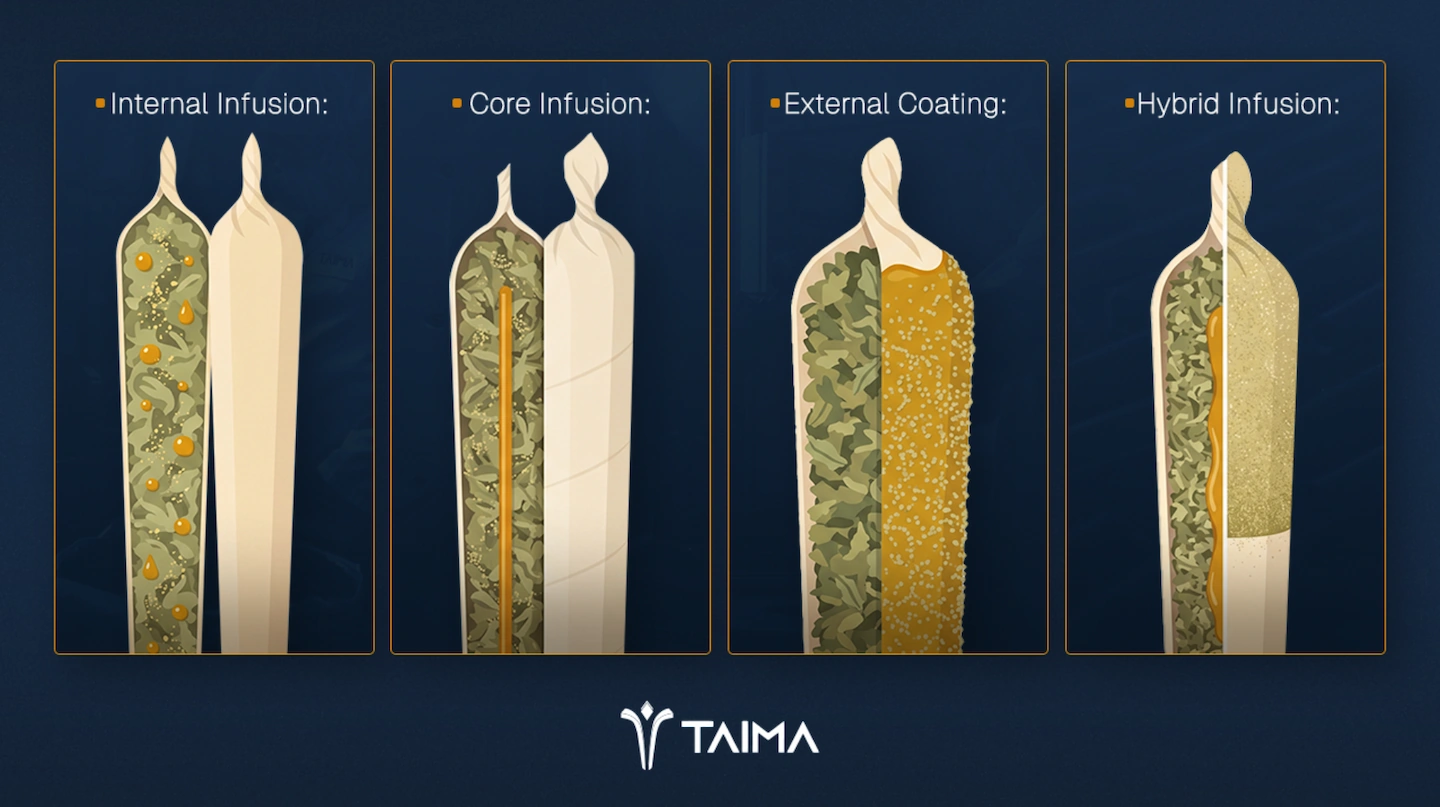
Internal infusion mixes concentrate directly into the flower before it reaches the filling machine. That might mean blending in kief, THCA, distillate, or another extract. For high-volume production, it means you can work with one infused blend rather than dosing or coating every pre-roll individually.
But a good formulation isn't necessarily a production-ready blend. Kief and other dry concentrates can separate from the flower during handling, leaving some pre-rolls with more concentrate than others. Oils bring a different problem: add enough sticky concentrate to an otherwise easy-running grind, and suddenly you're dealing with clumps, uneven fills, and material that won't feed properly.
We've seen producers develop infused blends that work well in small batches but struggle once they move to automated filling. Sometimes the answer isn't different equipment. It's adjusting the formulation so the flower and concentrate can move through the line consistently.
You want a blend that stays uniform from the first cone to the last, not one that requires you to make constant adjustments halfway through a run.
Center/Core Infusion
Center infusion gives you control over how much concentrate goes into each pre-roll and where it ends up. The flower is filled first, then distillate, live resin, rosin, or another extract is injected into the center. This is the method used to make hash holes and donut pre-rolls.
We like the control this method offers, but the pre-rolls need to be consistent before they reach the injector. Differences in fill density can affect where the concentrate ends up and how the pre-roll burns. If you're seeing oil against the paper or cores that won't stay centered, you’ll want to check the fill before changing the injection settings.
Thicker concentrates bring their own challenges. Rosin may need controlled warming to flow cleanly, and fluctuations in temperature can affect dosing or leave you clearing clogged injectors. Injection depth and placement need to stay consistent throughout the run, too.
The goal is to deliver the same measured core every time without turning injection into the slowest, messiest part of production.
External Coating
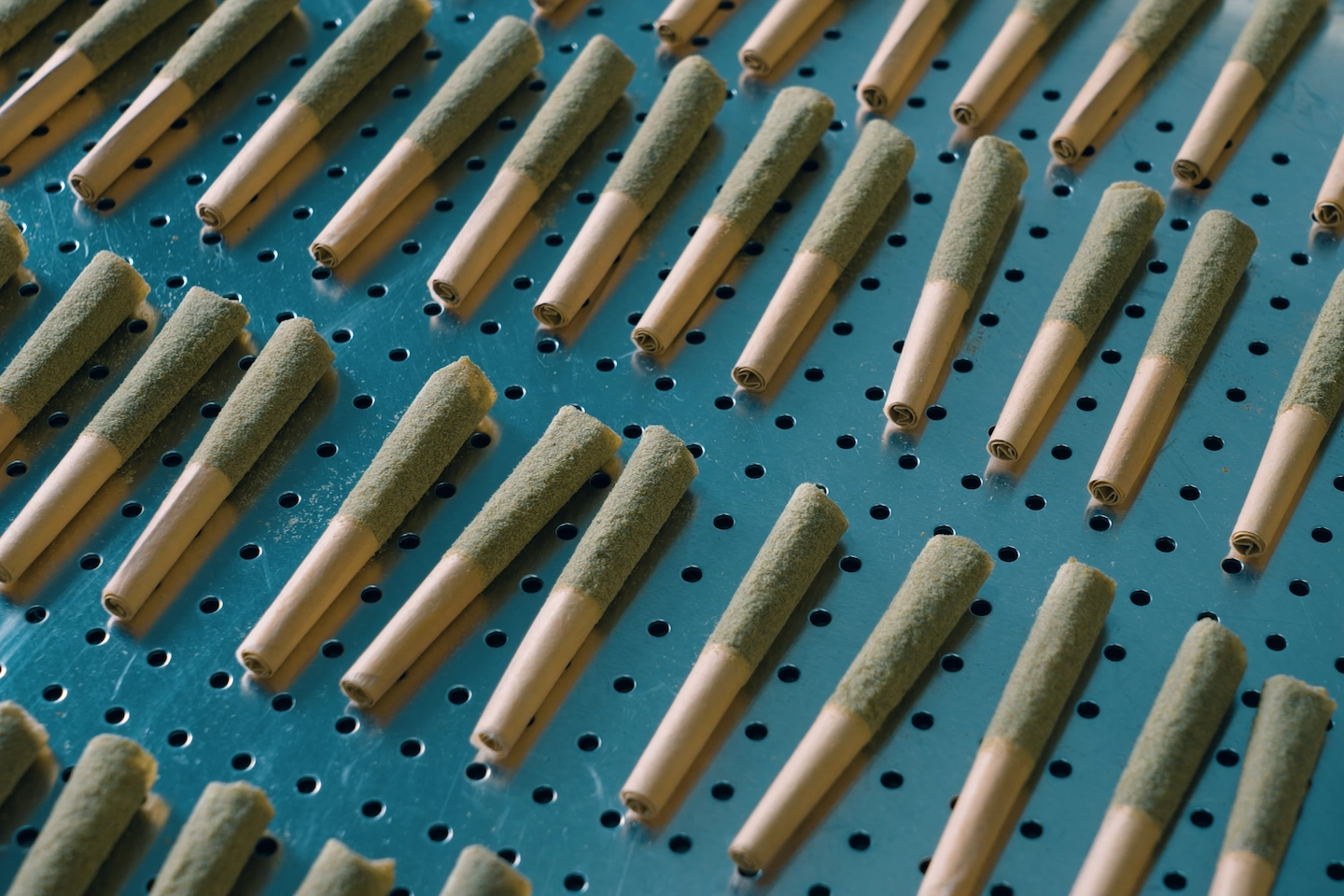
A kief-coated pre-roll might look simple enough, but producing thousands with the same coverage is another story. External infusion typically involves applying concentrate to a filled pre-roll, then rolling or tumbling it in kief, hash, THCA, or another dry concentrate.
Getting the oil application right is important. Too little oil, and the kief starts falling off. Put too much, and you're wasting concentrate, saturating the paper, and potentially affecting how the pre-roll burns. Viscosity matters, too, especially if you're spraying or using automated applicators.
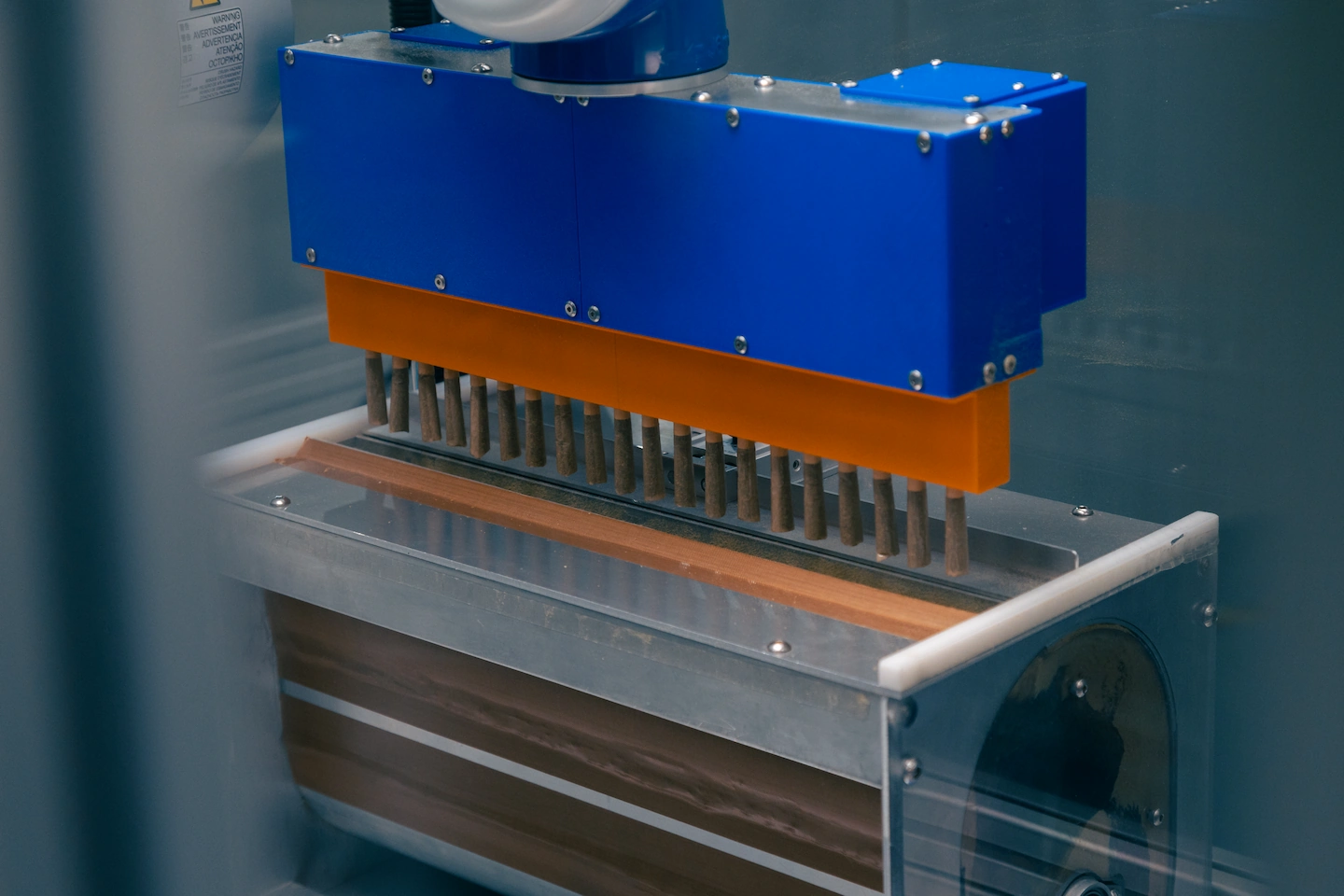
Hand-brushing and rolling can work for smaller batches, but it's a lot of repetitive handling as production grows. Automated or semi-automated coating equipment like our Taima kief coating machine can help control application amounts and improve consistency without requiring your operators to coat every pre-roll individually.
You still need to account for the extra handling, cleaning, and material loss that come with coating – a beautiful kief-covered pre-roll isn't much of a win if half the concentrate ends up on the equipment instead of the product!
Hybrid Infusion
Hybrid infusion lets you stack concentrates and infusion methods in the same pre-roll. Think flower blended with kief, a rosin core running through the center, and an exterior coating of concentrate and more kief. You can create some interesting combinations, but you're also giving your production line a lot more to handle.
For hybrid infusion to be successful, each infusion stage needs to work with the next. Internally infused flower has to fill and pack consistently before the pre-roll reaches the injector. The core needs to stay centered, and the exterior coating has to adhere without saturating the paper or making the finished product difficult to handle.
There's also more concentrate to account for. You need to control dosing at every stage, not just the total finished weight. Otherwise, you can end up with an expensive pre-roll that's inconsistent from one unit to the next.
Every additional step brings more handling, cleaning, and opportunities for concentrate loss. And if one station can't keep pace, everything behind it starts piling up.
How to Produce Infused Pre-Rolls at Scale
From grinding flower to applying concentrates and finishing each pre-roll, every step needs to deliver consistent results without slowing down production. Here's what to watch throughout the process.
Prepare the Flower
Don't send flower into a commercial grinder and assume everything coming out is ready for the filler. Start with properly cured flower, whether you're working with premium buds or smaller popcorn flower.
You want a consistent grind that feeds cleanly without turning the flower into dust. Too fine and you risk tight, poorly drawing pre-rolls. Too coarse and you're dealing with chunky pieces, stray stems, and uneven fills. Sifting out oversized material now is a lot easier than pulling poorly packed cones off the line later.
Moisture deserves the same scrutiny. Brittle flower can break down too finely, while overly moist material can clump and interrupt feeding. Get the grind, particle size, and moisture consistent before adding concentrate.
Prepare the Concentrate
Not every concentrate is going to cooperate with the same equipment. Distillate, live resin, rosin, hash, kief, and THCA concentrates all handle differently, and those differences matter when you're producing thousands of pre-rolls.
For injection and exterior coating, viscosity can make or break a run. Concentrate that's too thick can clog applicators, slow down dosing, or leave you with inconsistent amounts from one pre-roll to the next. Some extracts need controlled warming to flow properly, and keeping that temperature steady is just as important as getting it right initially.
Internal infusion has different demands. Oil can turn an otherwise easy-running grind into a sticky mess, while kief and other dry concentrates can separate from the flower during handling.
Set your concentrate amount or flower-to-concentrate ratio before production starts, and make sure the material behaves consistently in the equipment. You don't want to spend the entire run chasing clogs, uneven doses, or a blend that keeps separating.
Fill the Pre-Rolls
A fast filler doesn't do you much good if half the output needs fixing. Whether you're loading straight flower or a pre-infused blend, every cone needs a consistent weight and pack. Too tight and you're restricting airflow. Too loose and you risk gaps, uneven burns, and pre-rolls that don't hold their shape.
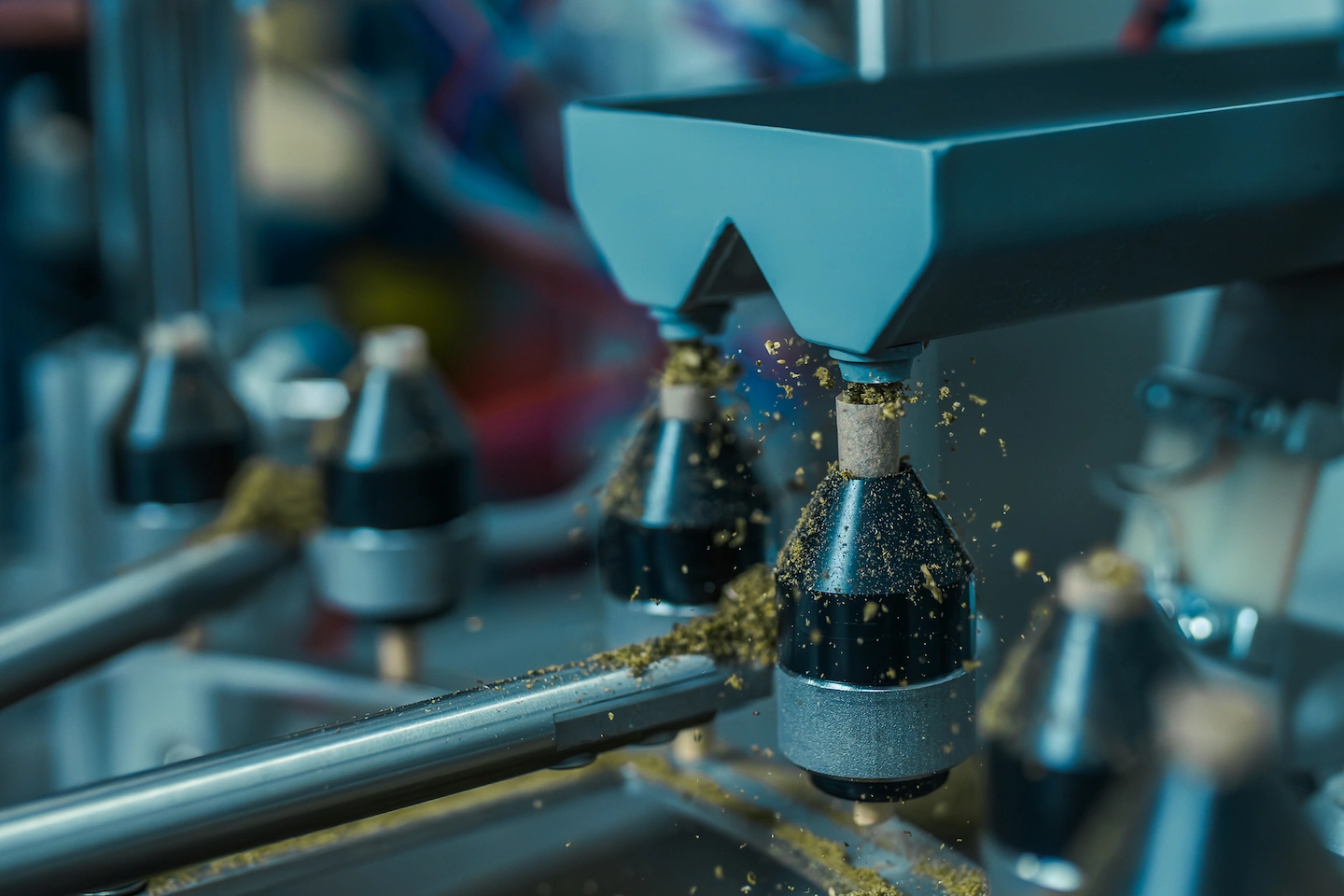
Vibration, tamping, and centrifugal filling can all produce consistent results, provided the equipment is dialed in for the material. A sticky, oil-infused blend won't necessarily feed or compact like uninfused flower. You may need to adjust the settings rather than simply pushing for more speed.
Fill density becomes especially important if you're injecting concentrate afterward. An uneven pack can throw off placement, create pockets of oil, or leave concentrate seeping into the paper.
The filler needs to deliver a consistent product that the next station can handle without additional adjustments or rework.
Apply the Infusion
A little concentrate in the wrong place might not seem like much until you're producing thousands of pre-rolls. Uneven doses, leaking oil, and clogged injectors can quickly turn a profitable run into trays of product that need rework.
For center infusion, injection depth, placement, and flow rate all need to be dialed in. Poor placement can send oil toward the paper instead of keeping it centered, while changes in flow can affect how much concentrate gets delivered.
For internal infusion, the concentrate is mixed with the flower before filling. Check that the blend stays uniform as material moves from the mixer through the filling equipment, rather than assuming the initial formulation will remain evenly distributed.
Automation can take much of the manual work out of infusion, but don't mistake a running machine for a consistent product. Verify dosing through appropriate measurements and watch for pooling or leakage before those problems spread across an entire batch.
Coat the Pre-Rolls, If Applicable
For externally infused and hybrid pre-rolls, apply the concentrate before adding kief, hash, THCA, or another dry coating. The order is straightforward, but keeping coverage consistent takes careful control of the application process.
Too much oil can saturate the paper and make pre-rolls difficult to handle. Too little leaves bare patches where the dry coating won't adhere. Either way, you're using expensive material without getting the finish you intended.
Automated or semi-automated coating and tumbling equipment can replace the slow work of rolling individual pre-rolls by hand. Check for buildup on applicators, uneven coverage, and loose coating material as finished units move toward the closing station.
Close and Finish
A perfectly filled, evenly infused pre-roll can still end up in the reject pile if the paper tears or the closure comes loose. Whether you're using a traditional twist or a folded Dutch crown, the finish needs to hold together and look consistent across the batch.
Automated and semi-automated closing equipment can take the repetitive handwork out of finishing, but uneven fill heights can leave you with sloppy folds, loose ends, or paper that won't close properly.
Infused pre-rolls add another complication. Concentrate near the opening can make the paper sticky and difficult to handle. Watch for torn tips, misshapen closures, leaking oil, and loose flower before those units make it into packaging.
Inspect and Test
Don't wait until the end of a run to find out something went wrong. By then, you could have thousands of pre-rolls with inconsistent weights, leaking concentrate, or a draw so tight they're practically unsmokable.
Check finished weights, closures, concentrate placement, and coating coverage before products move to packaging. Pull samples for draw and burn tests, too. A pre-roll can look perfectly fine on the outside and still canoe or need constant relighting.
Anything outside your specifications needs attention before more units make it through the line. It's a lot easier to correct an injector or filling setting than sort through thousands of finished pre-rolls later.
Equipment for Infused Pre-Roll Production
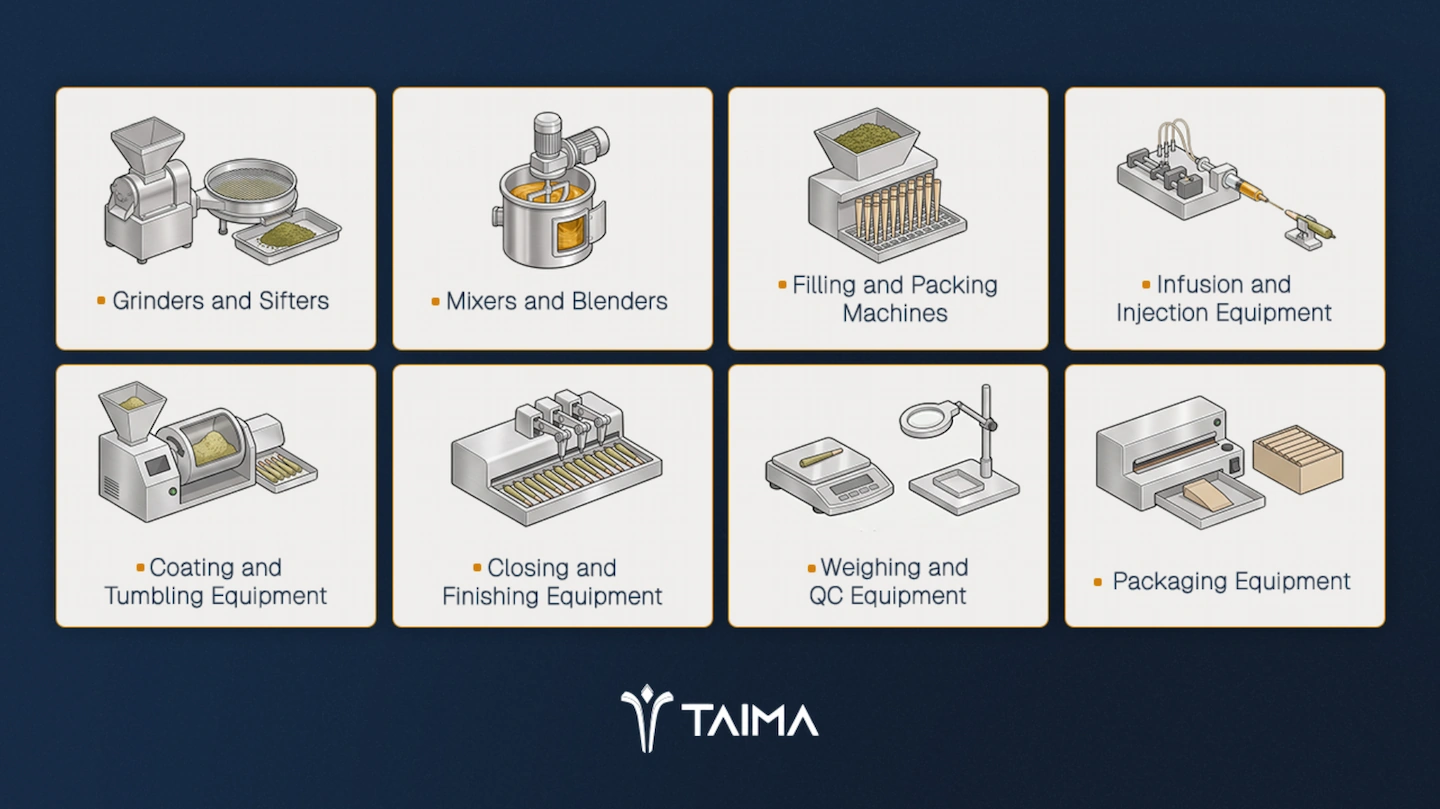
A line built for distillate-injected cones won't necessarily work for kief-coated joints or rosin-filled donuts. The equipment you need depends on the concentrate, infusion method, pre-roll format, and volume you're trying to produce.
Depending on your process, that might include:
- Grinders and sifters: Break down flower to a consistent particle size and remove stems or oversized pieces before filling.
- Mixers and blenders: Distribute concentrates evenly through flower for internal infusion.
- Filling and packing machines: Dose and compact flower or infused blends into cones with consistent weight and density.
- Infusion and injection equipment: Meter and apply concentrate to filled pre-rolls, including center/core injection.
- Coating and tumbling equipment: Machines like the Taima kief coating machine apply exterior concentrate and dry coatings to pre-rolls.
- Closing and finishing equipment: Twist, fold, or crown pre-rolls without relying on hand-finishing every unit.
- Weighing and QC equipment: Catch inconsistent weights and units that fall outside your specifications.
- Packaging equipment: Move inspected pre-rolls into individual packs or multipacks.
One thing we've learned from working with producers is that buying a faster machine doesn't always increase finished output. If filling is already outpacing infusion or finishing, more filling capacity just creates a bigger backlog. We look at how the entire line works together before recommending where to invest.
Look beyond speed. Consider how equipment handles sticky concentrates, how much cleaning and maintenance it demands, and how easily you can switch extracts, formats, or SKUs. Hours spent scraping residue out of equipment or resetting a line for a different product are hours you're not producing sellable pre-rolls.
Scaling Infused Pre-Roll Production
Making 500 infused pre-rolls by hand is one thing. Making 50,000 with the same dose, fill, and burn is another. The goal isn't to run every machine at full speed. It's to get more finished, sellable pre-rolls out the door without sacrificing the product you've spent time developing.
Start by finding out what's actually slowing production down. Maybe your filler is turning out thousands of cones an hour, but operators can't keep up with hand-coating. Maybe the injector needs constant cleaning, or finished pre-rolls are piling up waiting for inspection. Adding another high-speed filler won't solve any of those problems.
Instead, match equipment capacity across the line and automate the steps that are costing you the most time or labor. Account for cleaning, concentrate loss, changeovers, and rework when calculating actual throughput. A machine's advertised output means little if it spends half the shift idle.
Something we emphasize when working with producers is that switching from distillate to a thicker extract like rosin isn't necessarily a simple ingredient swap. Temperature controls, application settings, and even equipment compatibility may need another look. If you're planning to run multiple infused SKUs, build that flexibility into the line before you're juggling changeovers.
Just as important, standardize the process. Document formulations, equipment settings, concentrate temperatures, and QC checkpoints so every shift follows the same specifications.
At scale, consistency shouldn't depend on which operator happens to be running the line.
Quality Control & Consistency
A pre-roll can hit its target weight and still smoke poorly. Maybe the flower is packed too tightly, the concentrate has pooled against the paper, or the coating is shedding before the product even reaches packaging. That's why quality control needs to look at more than what's on the scale.
Start by setting specifications and acceptable tolerances for flower and concentrate amounts, finished weight, fill density, concentrate placement, coating coverage, and appearance. Draw and burn performance matter just as much. A perfectly shaped pre-roll isn't much good if customers have to relight it every few puffs.
The tricky part is keeping those results consistent as materials change. A new batch of flower might have a different moisture level or grind characteristics. A thicker concentrate might need different temperature or application settings. What worked on yesterday's run won't necessarily work today.
Calibrate equipment, check samples throughout production, and document formulations, temperatures, machine settings, and QC results. Use suitable measurement or testing methods to verify concentrate amounts and potency where applicable; appearance and finished weight alone can't establish either. Build these checks into your SOPs so operators know when to make adjustments and when to pull products for further inspection or testing.
You want the same pre-roll coming off the line on Monday morning as you do on Friday afternoon, regardless of who's operating the equipment.
Scale Your Infused Pre-Roll Line Profitably with Taima Extracts
At scale, every extra touch costs you. Every clogged injector, inconsistent fill, wasted gram of concentrate, and tray pulled for rework eats into the output you bought the equipment to produce – and the profit margin you’ll get from selling it.
A well-built line keeps flower moving, concentrate flowing, and finished pre-rolls coming off consistently without an operator hovering over every step. It should also give you room to move from distillate to rosin, change formats, or add a new infused SKU without reinventing production each time.
That's where Taima Extracts comes in. We help producers match filling, infusion, and finishing equipment to the products they're making and the volume they need to hit.
Ready to scale? Reach out to our team at Taima Extracts to get started.
Frequently Asked Questions
Here are answers to some common questions about infused pre-roll production, from concentrate selection to moisture, grind size, and burn quality.
What Concentrates Can Be Used in Infused Pre-Rolls?
Infused pre-rolls can use everything from sticky distillate and live resin to thick rosin, crumbly hash, powdery kief, and THCA concentrates. Oils and other viscous extracts can be mixed into flower, injected into the center, or applied outside the pre-roll, while drier concentrates like kief work especially well for blending and coating.
What Moisture Level Is Best for Infused Pre-Roll Production?
There isn't one ideal moisture level for every infused pre-roll. Flower that's too dry can become brittle and break down too finely, while too much moisture can make it clump or burn poorly. The right range depends on the flower, concentrate, infusion method, and equipment, but it should stay consistent from batch to batch.
Does Grind Size Matter for Infused Pre-Rolls?
Yes. You want a fairly uniform grind that fills and packs evenly without choking off airflow. Grind too fine and the pre-roll can become dense and hard to draw. Leave the flower too coarse or uneven and you can end up with gaps, inconsistent fills, and an uneven burn.
How Do You Prevent Infused Pre-Rolls From Burning Unevenly?
Start with consistent moisture, grind, and fill density, then look at how the concentrate is distributed. A heavy pocket of concentrate can slow one area while the flower around it burns ahead, leading to canoeing or repeated relights. Regular draw and burn tests can catch those problems while there's still time to adjust the batch.