Kief Coating Machine ROI: When Does It Pay Off?
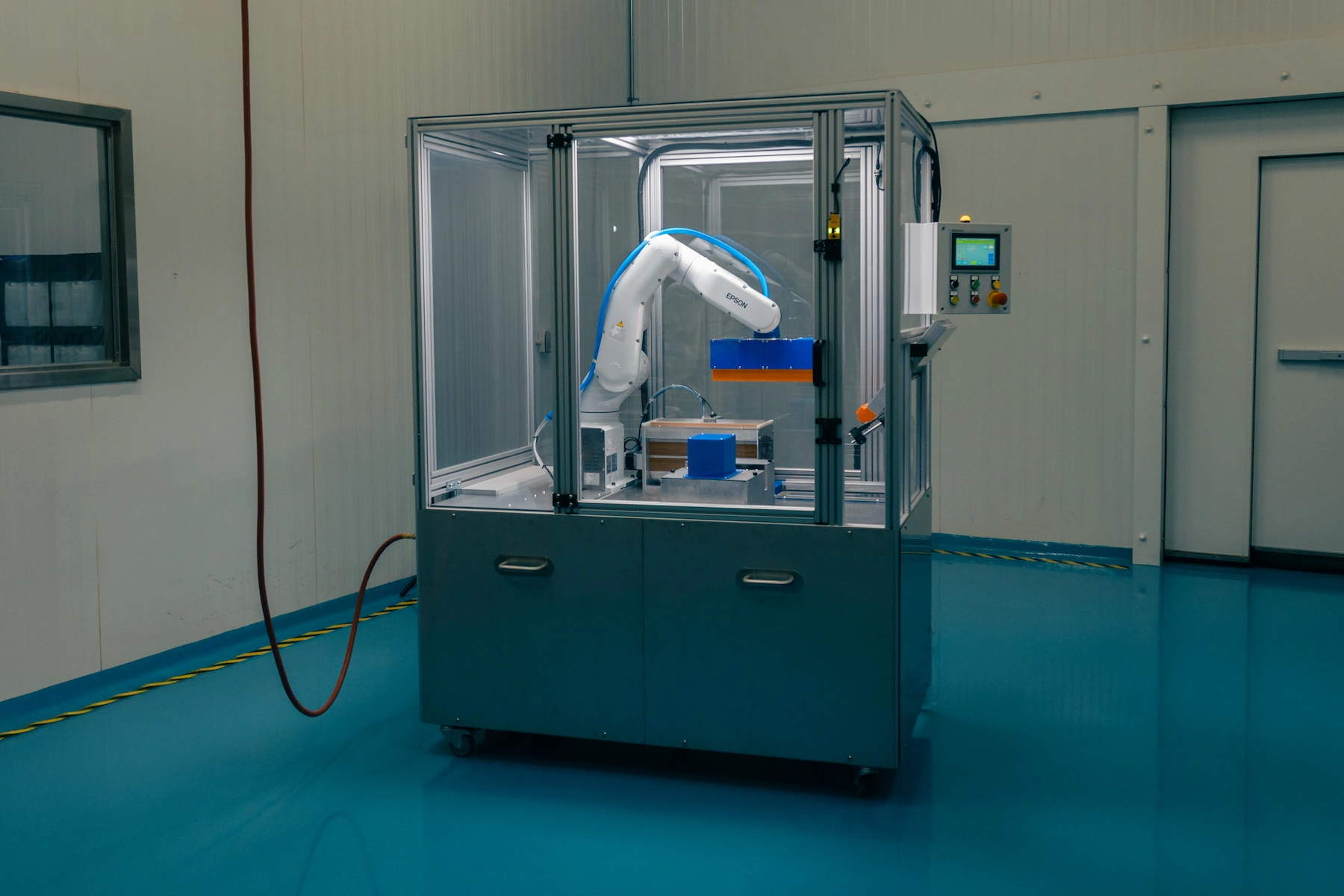
If you manually coat pre-rolls and joints with kief, you already know the challenges. It's nearly impossible to repeat the same finish twice, and the labor costs only grow as you scale.
That’s why so many operators consider the ROI of kief coating machines. Automated equipment helps manage production-line steps while producing consistent-quality units with less labor and time.
But how quickly will savings start to show up when you automate? In this blog post, we’ll help you estimate a realistic payback by factoring in your actual production volume, ongoing expenses, and demand.
What Determines the ROI of a Kief Coating Machine?
Let’s look at the individual factors that determine the ROI of kief coating machines.
Equipment Costs
The first and most obvious cost factor in determining ROI is the kief coating machine's initial purchase price.
However, these costs don’t just include the machine’s purchase price. You also need to consider freight, installation, commissioning, operator training, and any facility modifications required to accommodate the equipment.
If you're comparing the ROI of one machine to another, make sure you’re comparing the same functions. Do both pieces of equipment have the same functionality, or will you need to buy additional equipment to achieve the same result?
For instance, KiefLabs uses separate KL120 adhesive and KL360 coating systems, so you’ll need both machines to apply the adhesive first and then coat it.
Additional costs to consider that’ll vary on the products you’re producing and equipment you’re comparing often include:
- Specialized tooling for different pre-roll sizes
- Adhesive applicators
- Reservoirs
- Replacement parts
- Integration with existing production equipment
Additionally, overhead and ongoing ownership expenses should be considered in the overall “cost” for ROI calculations, including:
- Electricity cost
- Routine maintenance required
- Cleaning supplies
- Replacement components
- Service agreements
Think about it this way: equipment that requires frequent servicing or expensive proprietary parts may cost more over its operating life, even with a lower purchase price.
You also have to consider how you’re purchasing the equipment and the terms of that arrangement, as financing, leasing, and production-as-a-service arrangements all have different payment structures.
While purchasing requires more upfront capital, leasing or per-unit arrangements spread expenses over time. Avoid counting both the full purchase price and financing principal payments as separate costs in the same ROI calculation.
Labor Savings
As you know, manually coating pre-rolls with kief takes several workers to apply the adhesive, coat them, inspect quality, and package them.
The time it takes and how much you pay your team are the numbers you’ll use for comparison.
But you shouldn’t consider only the hourly wage for this cost. Don’t forget to account for payroll taxes, benefits, and other employer-paid expenses to get the full picture of savings.
When you factor everything in, calculate your labor savings per finished, acceptable pre-roll at the same production volume.
Also keep in mind every machine will handle the “labor” of coating pre-rolls with kief differently. Some machines handle both adhesive application and kief coating, while others require staff to transfer products or handle other steps in the process.
Taima Extracts’ automated machines were specifically built to handle both the adhesive application and kief coating thanks to our founders' experience of doing both and understanding the challenges of equipment that doesn’t.
Lastly, consider moving employees to different departments rather than removing them from your payroll. This affects whether a machine is actually lowering your labor costs or simply freeing up employees to boost other areas of production.
Material Waste and Rework
The adhesive and kief you use are production costs that you also have to consider when considering automation with a kief coating machine.
Any loss in either compound at volume, meaning overapplication and wasted material, can add up across thousands of pre-rolls.
Kief coating machines tighten up the adhesive and coating process, reducing material loss and reworks from poor adhesion, patchy coatings, clumping, or inconsistent coverage.
To figure out the savings of what you’ve lost doing so manually, compare actual material consumption against the amount required to meet the product's coating specifications.
You’ll also need to consider the time and labor it takes to rework the joints that didn’t pass quality control, or the materials that can be recovered and safely reused under the facility's quality procedures.
This end calculation is your savings that you can recoup when automating the process and improving control over material application.
Of course, like other factors, your exact savings will depend on the equipment you invest in and its exact coating process.
At Taima, we engineered our kief coating machine to use adjustable rotation speeds, dip duration, and built-in clump management to address these common quality control issues to reduce the number of rejects or reworks.
Production Volume and Efficiency
The equipment’s capable volume and how it improves your operation’s efficiency should be considered in the kief coating machine’s ROI.
You don’t want to rely on the machine’s advertised throughput. This number doesn’t accurately reflect how many finished, sellable pre-rolls a facility can produce per hour with its own unique SKU or circumstances.
Even more, different manufacturers measure throughput differently, so you’re not always comparing apples to apples. Some measure adhesive application separately from kief coating, while others report output after both stages.
Instead, compare equivalent production metrics when evaluating equipment. To more accurately calculate actual hourly and monthly output, account for:
- Loading
- Refilling
- Cleaning
- Changeovers
- Downtime
- Quality checks
When doing so, a machine rated for thousands of units per hour may produce considerably fewer over a full shift.
It’s also wise to consider actual utilization just as much as speed [1]. This means taking into account how many hours the equipment will realistically run each month and if your existing orders and project demand can justify the capacity.
A high-output machine running only occasionally may take longer to pay for itself.
And most importantly, evaluate the line as a whole, not just automating one step. For example, increasing your coating speed won’t necessarily increase your total volume output if the steps downstream can’t keep up.
If additional equipment or staffing is needed for the machine, these are costs to be considered in the ROI calculation.
How to Calculate Kief Coating Machine ROI
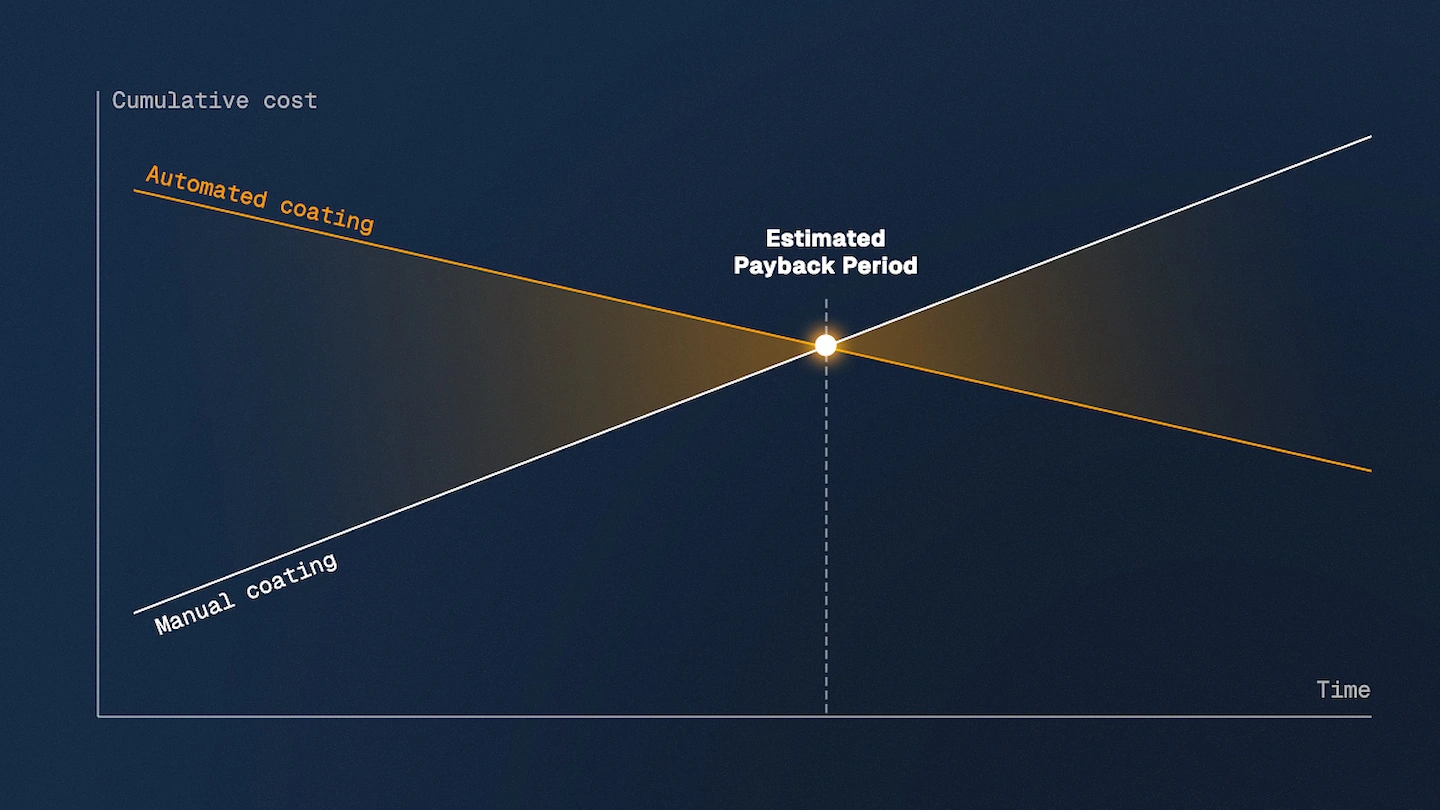
We’ll give an example to demonstrate the ROI of a kief coating machine.
Let's say a cannabis manufacturer produces 50,000 finished, sellable kief-coated pre-rolls per month and is considering investing in an automated kief-coating machine to save on costs.
Along with ROI, another useful metric is the payback period, which measures how long it takes to recover an investment's initial cost through savings or cash inflows [2]. The shorter the payback period, the sooner the equipment has paid for itself.
We'll assume the operation maintains the same monthly output before and after automation.
Example Monthly Operating Costs
Assumed upfront investment:
- Equipment purchase price: $60,000
- Installation and training: $5,000
- Total investment: $65,000
For simplicity, this example assumes no recurring equipment fees or additional revenue from increased production. Material losses and rework are counted separately from kief and adhesive costs to avoid double-counting.
Calculating the Savings
Now, let’s look at the numbers, keeping 50,000 pre-rolls produced as our example:
- Manual cost per finished pre-roll: $33,000 ÷ 50,000 = $0.66
- Automated cost per finished pre-roll: $21,500 ÷ 50,000 = $0.43
- Monthly operating savings: $33,000 − $21,500 = $11,500
- Estimated payback period: $65,000 ÷ $11,500 = approximately 5.7 months
- Simplified first-year ROI: [($11,500 × 12 − $65,000) ÷ $65,000] × 100 = approximately 112%
In this hypothetical scenario, automation reduces coating costs by $0.23 per finished pre-roll, saving a manufacturer making 50,000 pre-rolls approximately $11,500 per month.
At that rate, the equipment could pay for itself in less than six months ($69,000 total six-month savings), excluding any increase in production and revenue that it allows for!
Actual savings, ROI, and payback periods will vary based on production volume, labor rates, material costs, equipment performance, utilization, and other operating expenses [3].
Want a more accurate look at the potential ROI of a kief coating machine for your operation? See the ROI calculator on our equipment and automation page.
When to Invest in a Kief Coating Machine
So when should you invest in a kief coating machine?
Investing in automation makes the most sense when you have enough demand, costs, and production volume to justify the investment.
Using this guide and the ROI calculations provided will help you take your real-time data and calculate your current payback period and how to do so when comparing different equipment.
Ready to discuss your production volume and specific equipment needs? Explore cost savings with Taima Extracts. Get in touch with our team today to start scaling your pre-roll business.
Sources
[1] Lean Enterprise Institute. “Overall Equipment Effectiveness.” Lean Enterprise Institute. https://www.lean.org/lexicon-terms/overall-equipment-effectiveness/
[2] OpenStax. “11.2 Evaluate the Payback and Accounting Rate of Return in Capital Investment Decisions.” Principles of Accounting, Volume 2: Managerial Accounting. https://openstax.org/books/principles-managerial-accounting/pages/11-2-evaluate-the-payback-and-accounting-rate-of-return-in-capital-investment-decisions
[3] Thomas, D., Kneifel, J. D., & Parekh, P. (2024). A Guide to the Smart Investment Tools. National Institute of Standards and Technology, NIST Advanced Manufacturing Series 100-62. https://doi.org/10.6028/NIST.AMS.100-62